
First in a spin off series of football grounds that have since vanished from Scottish Football history in to housing estates, industrial units and even supermarkets. Covering clubs grounds who still exist and clubs who are no longer with us.
Recently when I came across an old book from the early 1990’s online that I recall reading in the school library, that being, Bob Crampsey’s: The First One Hundred Years, a book by the famous Scottish Football historian in celebration of 100 years of the Scottish football league. Nostalgic, I ordered the book on Amazon, had a read through and came across an old team in Dumbarton called Dumbarton Harp. In my younger years, I wouldn’t have given the team a second thought but in recent years Dumbarton is my adopted home and I was intrigued by who this team was and where in Dumbarton they played their football. 
It was only when I looked in to the team and the location of the ground in more detail, I started to develop an small obsession with the Scottish football grounds of the past. During some early digging I have found the locations of many old grounds in Scotland, consigned to the history books and have now set out to re-visit some of the grounds.
The first ground we are going to talk about is Meadow Park, Dumbarton, home of the aforesaid Dumbarton Harp Football Club. Formed 1894 as an amateur club, they played in several senior non league divisions and junior football for a season until the early 1920’s, when they had the opportunity to join the Scottish Football League.
In the early 1920’s the decision was made in Scottish Football that they would expand and it was decided to open up the league and create a Third Division in season 1923-24. Dumbarton Harp took the opportunity along with 16 other Football teams, to enter into the Scottish Football League.
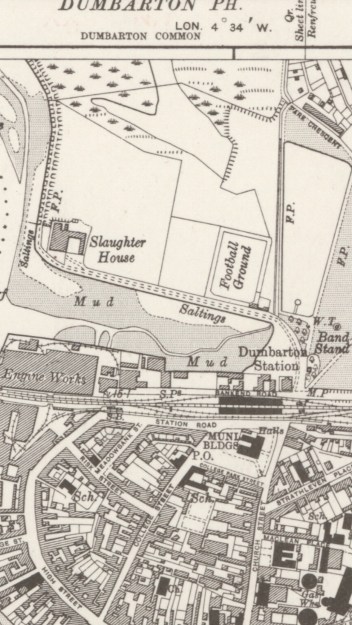
The club played their football at Meadow Park which can be seen on the map (below) adjacent to Dumbarton Central Railway station and a Slaughter House, which couldn’t have been to pleasant a smell while watching the game as the westerly wind blew past. The ground consisted of two stands (a pavilion and a stand) and although records at the time, not being the best, recorded around 3000 folk at a game against Queen of the South in 1923.
With the name Harp, its quite clear this wasn’t a group of musicians who decided to dump the stringed instrument to form a football club. The club had its roots the large Irish immigrant community of Dumbarton. The team also played in green jerseys or green and white hooped jerseys, as you can see in the picture of the team winning the Dunbartonshire Charity cup, Western League and Western Cup in 1919 below. 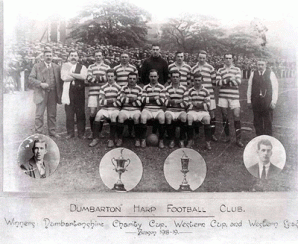
It was around this time that the opportunity came when the Scottish Football league decided to open up the league and create a Third Division in season 1923-24 and Dumbarton Harp took the opportunity to enter into the Scottish Football League.
Dumbarton managed a respectable finish of 10th place in the inaugural season of a league consisting of 16 teams. The next season didn’t fair too well though with the club having to shut its doors half way through the season due to financial difficulties.
The set up of the Third Division by the Scottish Football league itself proved a disaster and the league was disbanded just over a year later with the majority of clubs also facing financial difficulties, failing to fulfil fixtures. Of the 16 teams that played in the Third Division in the 3rd and final season when the League collapsed, only 3 are still in the SPFL today, being Brechin, Montrose and Forfar.
It would always have been a struggle for Dumbarton Harp, who would not only need to complete for local crowds with the already established Dumbarton Football Club, who within the last 30 odd years had been both Scottish cup winners and 2 times Scottish League winners, the draw of an even more successful club around 20 miles away who catered for the Irish immigrant community and had been one of the leading clubs in the country for 30 years previous. It would never been an easy sell and the step up was maybe too much for the small club.
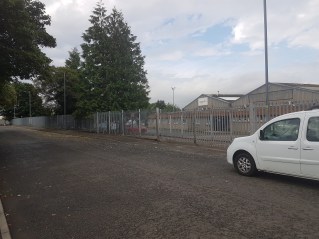
Who knows, had they stayed at a lower level they could have been a prominent junior team now but as fate would have it they folded in 1925 and the ground fell in to disrepair, eventually being demolished in the 1950s.
The land were the former ground is now part of an industrial estate. I circumnavigated the area looking for any structure from the past that may be linked to the old ground, but all the buildings looked at least post war and from what I could see (although I would bow to better knowledge) nothing remained.
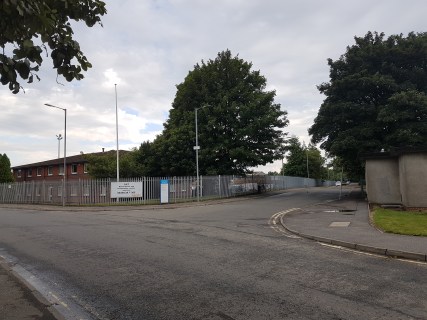
A few strange stares from workers of the plant who now inhibit the land were the old ground stood, as I took pictures of what they would most likely see as a very boring street, however the streets and land hold a very small part of Scottish Football history and hopefully the story will live on little longer.
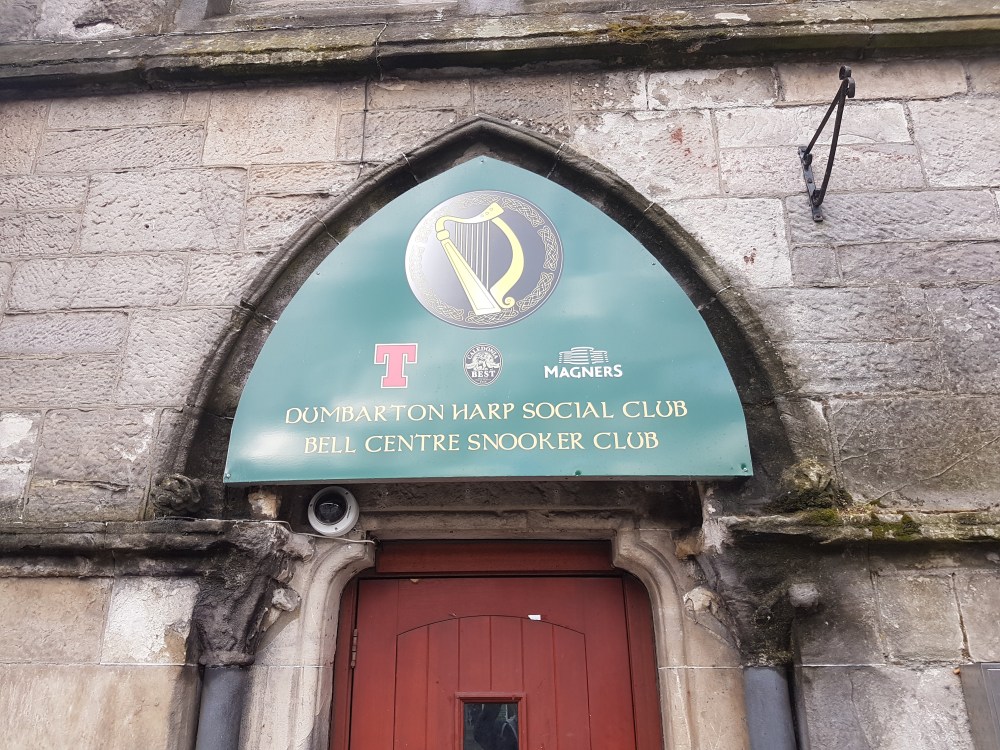
The name of the team lives on the form of the local social club that carries it’s name and as it approaches the 100 year anniversary of the teams brief involvement and demise from Scottish Football, the history books will always show they gave it a shot.
Until next time
The 42 Tour

 The 42